April 22, 2026
How Spectrum Impacts Secondary Metabolite Production (Not Just Yield)
When growers talk about dialing in their lighting, the conversation almost always comes back to yield. Grams per watt. Grams per square foot. But if you’re only optimizing for weight, you’re likely leaving value on the table.
The real differentiator in today’s market isn’t just how much you grow, it’s what’s inside the flower. Aroma, flavor, smoothness, intensity, and effect are all driven by a complex mix of compounds known as secondary metabolites.
And the light spectrum you choose has a direct impact on how those compounds are produced, expressed, and balanced [1].
Secondary Metabolites: The Full Picture
Most conversations stop at terpenes. But they’re just one piece of a much larger system. Cannabis produces a wide range of secondary metabolites, including:
- Cannabinoids → core psychoactive and therapeutic effects
- Terpenes → dominant aroma and directional experience
- Sulfur compounds (VSCs) → intensity, pungency, and “loudness” [8]
- Esters → fruity, sweet, volatile top notes
- Phenols / polyphenols → sharpness, spice, and chemical complexity [4]
- Flavonoids + others → nuance, smoothness, and flavor depth [2]
Collectively, these compounds define how a cultivar actually feels to the end user, not just how it tests on paper [6].
Why Spectrum Controls More Than Just Terpenes
All of these compounds are secondary metabolites, meaning they are produced in response to environmental signals rather than basic growth requirements [1]. Light spectrum is one of the most powerful of those signals.
Through plant photoreceptors:
- Different wavelengths activate distinct signaling pathways
- These pathways regulate enzyme activity involved in metabolite biosynthesis
- Carbon allocation shifts between growth and chemical production
The result is not just more or fewer compounds, but different compounds, expressed in different ratios [9].
The Spectrum → Metabolite Relationship
Blue Light (400–500 nm)
Blue light is strongly associated with secondary metabolite production.
Research shows it can increase:
- Cannabinoid concentration
- Terpene concentration
- Flavonoid and phenolic compounds
However, it often reduces total biomass when overapplied [7]. In practice, blue light enhances chemical density and complexity, but must be balanced against yield.
Red Light (600–700 nm)
Red light is the primary driver of:
- Photosynthesis
- Flower development
- Biomass accumulation
However, red-dominant spectra without sufficient shorter wavelengths tend to produce:
- Lower concentrations of secondary metabolites
- Less complex chemical profiles
In practice, red builds weight, but not necessarily quality or expression.
UV Light (280–400 nm)
UV acts as a targeted stressor, triggering defense responses in the plant. Cannabis produces secondary metabolites, especially cannabinoids and terpenes, as photoprotective compounds under UV exposure [5].
UV exposure has also been linked to increases in:
- Flavonoids
- Phenolic compounds [3]
- Potentially sulfur-containing volatiles tied to aroma intensity
However, effects are highly dependent on dose:
- Low, controlled UV → increased chemical richness
- Excessive UV → reduced yield or compound degradation
In practice, UV is a precision tool for increasing intensity, pungency, and complexity.
Far-Red Light (700–800 nm)
Far-red influences:
- Flowering speed
- Canopy-level photosynthesis
- Plant morphology
But it also shifts plant behavior toward growth over defense chemistry, which can reduce secondary metabolite concentration.
In practice, far-red improves efficiency and yield, but can dilute chemical richness if overused.
It’s Not Just More Compounds, It’s Different Compounds
One of the most important insights from recent research:
Spectrum doesn’t just change how much is produced, it changes what is produced.
Different wavelengths regulate:
- Terpene synthase expression
- Flavonoid biosynthesis pathways
- Production of volatile compounds (including esters and sulfur compounds)
Studies show that different light spectra can produce distinct chemical profiles within the same cultivar, not just variations in total concentration [9].
This means:
- Two identical genetics under different spectra can produce completely different sensory outcomes
- Lighting is a direct lever on flavor, aroma, and experience
Why Full-Spectrum Matters
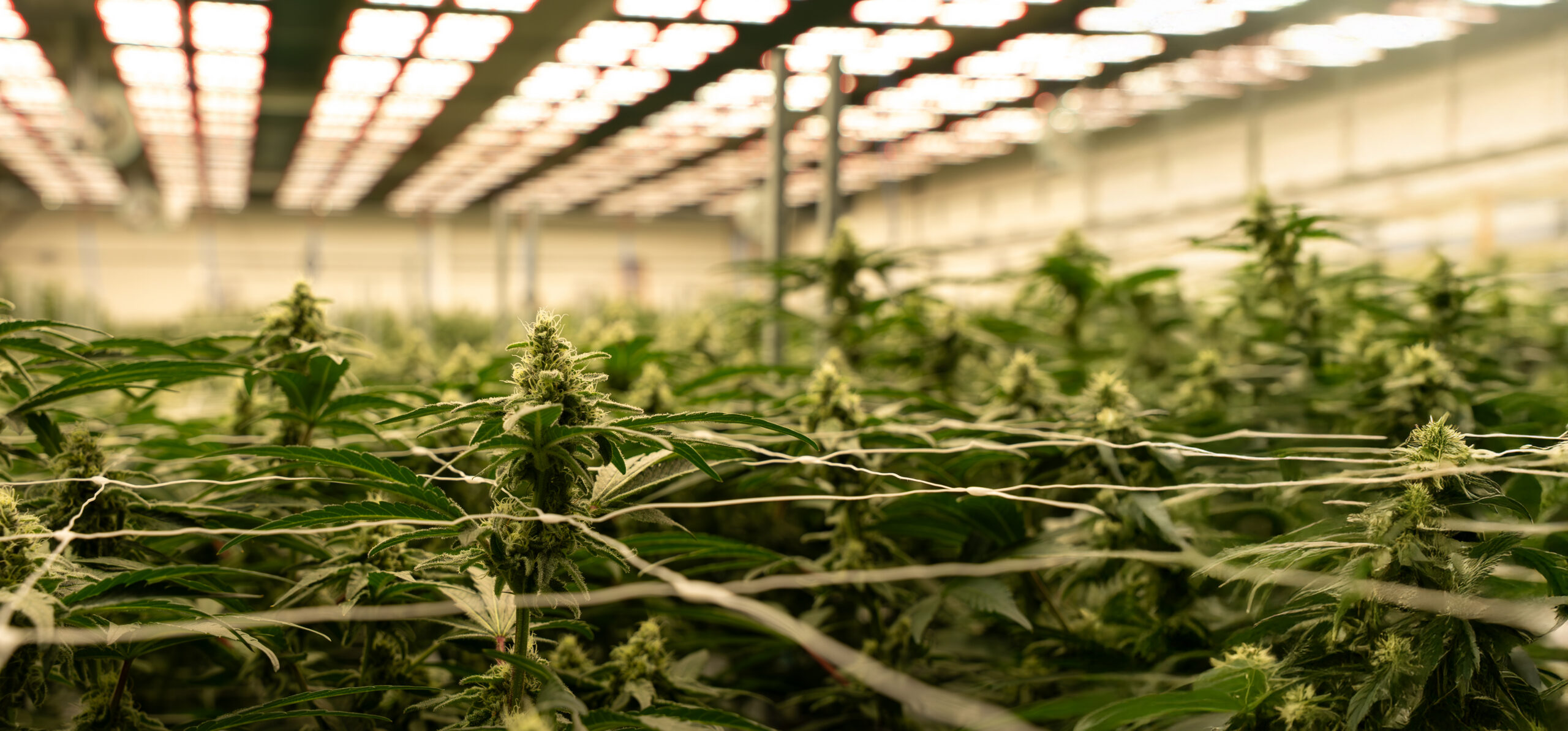
Plants evolved under sunlight, not narrowband light.
Broad-spectrum lighting:
- Activates multiple photoreceptors simultaneously
- Supports both growth and stress-response pathways
- Enables balanced secondary metabolite production
Research increasingly supports full-spectrum approaches for optimizing both yield and phytochemical expression [1].
This philosophy drives how we design our fixtures, delivering the spectral breadth needed to support not just plant growth, but full chemical expression.
Practical Takeaways for Growers
- Don’t optimize for one compound class
Terpenes alone don’t define quality—overall metabolite balance does - Use blue strategically
One of the strongest levers for increasing chemical richness - Treat UV with precision
Small doses can enhance intensity and complexity - Balance red and far-red carefully
Critical for yield, but can dilute quality if overused - Test by cultivar
Secondary metabolite responses are highly strain-specific
The Bottom Line
The market is evolving. It’s no longer just about THC percentage or yield per square foot. The growers who win are producing flower that stands out immediately:
- Stronger aroma
- More complex flavor
- Smoother experience
- More differentiated effects
That comes from fully developed secondary metabolite profiles, but the entire chemical system working together.
And spectrum is one of the most powerful tools you have to control it.
References
- Ahsan, S. M., et al. (2024). Illuminating Cannabis sativa L.: The Power of Light in Enhancing Growth and Secondary Metabolite Production. Plants (MDPI)
- Andre, C. M., et al. (2016). Cannabis sativa: The Plant of the Thousand and One Molecules. Molecules
- Agati, G., et al. (2012). Flavonoids as antioxidants in plants. Plant Physiology and Biochemistry
- Cheynier, V., et al. (2013). Plant Phenolics: Recent Advances. Annual Review of Plant Biology
- Desaulniers Brousseau, V., et al. (2021). Cannabinoids and Terpenes as Photo-Protectants. Frontiers in Plant Science
- ElSohly, M. A., et al. (2017). Phytochemistry of Cannabis sativa L. Journal of Natural Products
- Morello, V., et al. (2022). Light Quality Impacts Growth and Phytochemical Yield. Plants (MDPI)
- Oswald, I. W. H., et al. (2021). Volatile Sulfur Compounds in Cannabis. ACS Omega
- Reichel, P., et al. (2022). Light Spectra Effects on Cannabinoids and Terpenes. Plants (MDPI)
JumpLights designs and manufactures high-efficiency LED grow lights for commercial cannabis and horticulture facilities. All products are engineered, assembled, and quality-tested in the USA.
Disclaimer
The content appearing on this webpage is for informational purposes only. JumpLights makes no representation or warranty of any kind, be it expressed or implied, as to the accuracy, completeness, or validity of the information. Any performance parameters, specific design features, or discussions of lighting fixtures or specs should not be inferred to represent what will be delivered for your specific project. Consult the JumpLights terms of service for more information.